

How to Store Whole Bean Coffee for Maximum Freshness
Table of Contents
- Understanding the Four Enemies of Coffee Freshness
- How to Store Whole Bean Coffee at Room Temperature
- Best Coffee Storage Containers for Optimal Freshness
- Can You Freeze Coffee Beans? A Complete Guide
- How Long Does Coffee Stay Fresh After Roasting?
- Recognizing Signs of Stale Coffee Beans
- Storage Tips for Travel and Changing Locations
- Frequently Asked Questions
Last Updated: September 3, 2026
Understanding the Four Enemies of Coffee Freshness
Coffee's flavor profile is fragile. The moment beans leave the roaster, four forces begin degrading their quality: heat, light, moisture, and air exposure. Understanding these enemies is essential to storing whole bean coffee properly.
Heat accelerates oxidation and oil degradation. Temperatures above 75°F speed up chemical reactions that flatten the complex flavors you paid for (peer-reviewed research). Light breaks down aromatic compounds, which is why specialty roasters use opaque bags. Moisture causes beans to absorb humidity, diluting their oils and inviting mold. Air exposure oxidizes the bean's surface, turning vibrant aromatics stale within days.
The good news: you control all four variables. Proper storage neutralizes these threats and extends peak flavor significantly.
How to Store Whole Bean Coffee at Room Temperature
Room temperature storage works well if you follow one rule: keep beans in an airtight container away from heat and light sources. But "room temperature" varies dramatically by climate, and your storage strategy should adapt.
Standard Room Temperature Storage
The ideal spot is a cool, dark cabinet or pantry, not above the stove, not on a sunny windowsill. Ambient temperature should stay below 70°F if possible. An airtight container with a one-way valve is your best tool here. The valve lets carbon dioxide escape (degassing naturally continues for weeks after roasting) while blocking air from entering.
Avoid the refrigerator at room temperature storage stage. Many people think cold helps, but temperature fluctuations create condensation when you open the container, introducing moisture. Store at a consistent temperature instead. If your kitchen runs warm, a cool pantry works better than a cold fridge.
How long does coffee stay fresh at room temperature? Peak flavor typically lasts 2-4 weeks after roasting (peer-reviewed research). You can still brew acceptable coffee beyond that, but the aroma fades noticeably.
Climate-Specific Storage Adjustments
Your geographic climate significantly impacts how quickly beans degrade. Standard advice assumes moderate humidity and stable temperatures, but many regions require adapted strategies.
High-humidity climates (tropical, coastal, or humid subtropical regions): Moisture is your primary enemy. Beans absorb humidity from the air, and even airtight containers can allow slow moisture migration over weeks. In these climates, prioritize airtight containers with rubber gaskets that create a true seal, not just snap-lid canisters. Store beans in the coolest, driest location available: a pantry away from windows, or ideally in an air-conditioned bedroom closet rather than the kitchen, where cooking steam and dishwashing introduce ambient moisture. Consider adding a small silica gel packet (food-grade, the kind used in vitamin bottles) inside your storage container to absorb excess humidity. Replace the packet every 2-3 weeks. Reduce your room temperature storage window to 2-3 weeks maximum; consider freezing portions after 10 days if you won't use them immediately. Relative humidity above 60% accelerates staling noticeably (peer-reviewed research).
Arid climates (desert Southwest, high-altitude regions, or dry continental areas): Low humidity is less of a concern, but temperature swings are often extreme. Daily temperature variations of 30-40°F between morning and evening are common. These swings create condensation risk every time temperature drops. Store beans in the most thermally stable location available: an interior closet, basement, or pantry away from exterior walls and windows. Avoid garages or sheds where temperature fluctuates wildly. Opaque airtight containers work well here; the stable interior environment minimizes condensation. Your room temperature storage window can extend to 4 weeks in arid climates because low moisture slows oxidation.
Temperate climates with seasonal variation: If your region experiences significant seasonal temperature changes (cold winters, warm summers), adjust storage based on season. In winter, a cool pantry at 60-65°F is ideal. In summer, when kitchens warm to 75-80°F, shift to refrigerator storage (accepting minor condensation risk) or freeze beans in portions. Spring and fall offer optimal storage conditions; buy larger quantities during these seasons if possible, then freeze portions for summer use.
High-altitude regions: Lower atmospheric pressure at altitude doesn't directly affect bean storage, but altitude often correlates with low humidity and temperature swings. Follow arid climate guidance above.
Monitoring Freshness in Your Climate
Regardless of climate, check beans weekly. Open the container, smell the beans, and assess aroma intensity. In high-humidity climates, staling accelerates, so expect peak flavor to fade by week 2-3 instead of week 3-4. In arid climates, beans stay fresher longer, but temperature swings can still degrade quality if the container isn't truly airtight. If aroma noticeably diminishes before you expect it, your storage location isn't ideal, move beans to a cooler, more stable spot or switch to freezing.
Best Coffee Storage Containers for Optimal Freshness
The container matters as much as the location. Not all storage solutions are equal.
Opaque airtight canisters are the gold standard. They block light completely, seal out air, and maintain stable humidity. Look for containers with rubber gaskets that create a true seal. Glass jars, even if airtight, fail because they're transparent. Light penetrates glass and degrades beans inside, even in a dark cabinet. Avoid clear glass jars entirely.
Vacuum-sealed containers work well for short-term storage (1-2 weeks). They remove excess air, slowing oxidation. However, they don't accommodate ongoing degassing the way one-way valves do, so beans can build pressure.
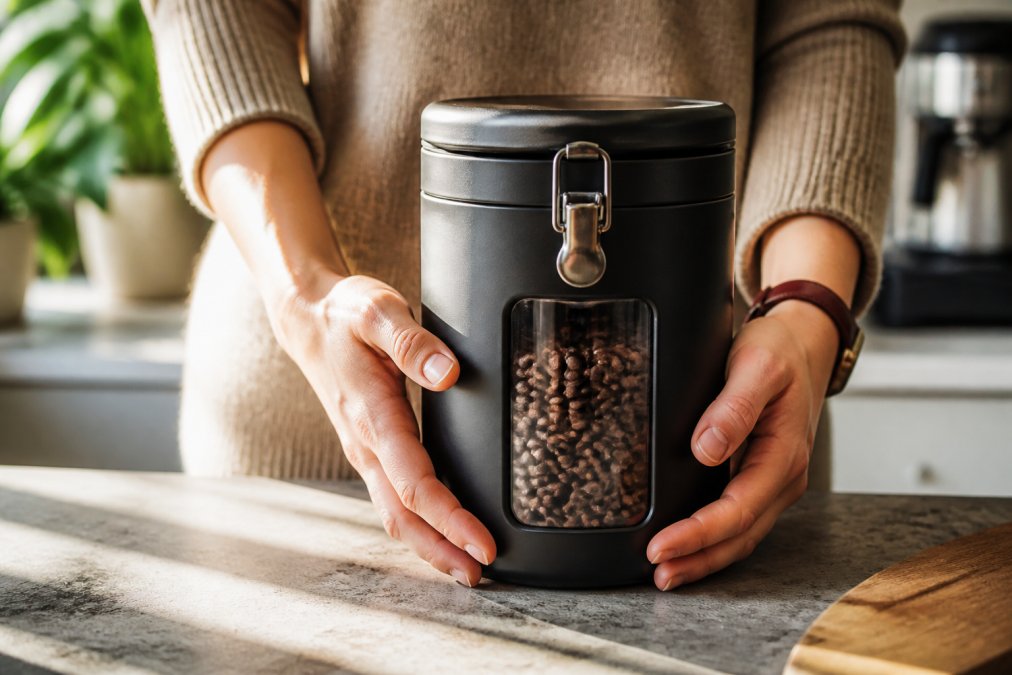
Nitrogen flushing, where manufacturers fill bags with inert nitrogen gas instead of air, preserves freshness longer. When you order from specialty roasters like Chi Brew, beans often arrive in nitrogen-flushed bags. Transfer them to an opaque airtight container once opened to maintain that protection.
Avoid paper bags, even if they have a one-way valve. They offer minimal protection from light and moisture. Use them only as temporary vessels before transferring to proper storage.
| Storage Method | Best For | Duration | Key Advantage |
|---|---|---|---|
| Opaque airtight canister | Long-term home storage | 3-4 weeks peak | Blocks light completely |
| Vacuum-sealed container | Short-term storage | 1-2 weeks | Removes excess air |
| Original nitrogen-flushed bag | Unopened beans | 2-3 months | Factory sealed |
| Paper bag with valve | Temporary only | 3-5 days | Not recommended |
Can You Freeze Coffee Beans? A Complete Guide
Freezing extends freshness significantly, but the process requires precision. Done correctly, frozen beans maintain quality for 3-4 months. Done carelessly, they absorb moisture and become unusable.
The key principle: freezing works because it halts oxidation and slows all chemical degradation. At 0°F, enzymatic reactions that degrade flavor compounds nearly stop. However, condensation is the enemy. When frozen beans warm up, moisture forms on their surface, damaging the bean's oils and introducing mold risk.
Why Condensation Happens and How to Prevent It
Coffee beans are porous. When a sealed container of frozen beans moves from freezer to warm air, the temperature difference causes water vapor in the air inside the container to condense on the bean surface, the same principle that fogs a cold glass of water on a hot day. This moisture soaks into the bean's pores, diluting the oils that carry flavor and aroma. Even 30 minutes at room temperature can introduce enough moisture to noticeably degrade quality.
The solution is gradual temperature equalization. Moving the sealed container from freezer to refrigerator the night before brewing (8-12 hours) allows the beans to warm slowly. The internal air temperature rises gradually, reducing the condensation gradient. By the time you open the container, the beans are near refrigerator temperature (around 40°F), and minimal moisture has formed. This is why rapid thawing, leaving beans on the counter or using warm water, always fails.
Preparing Beans for Freezing
Freeze beans in their original one-way valve bag if unopened. If you've already opened the bag, transfer beans to an airtight freezer-safe container. Opaque plastic or glass with a tight seal works best; avoid containers with any air gaps or loose-fitting lids. Vacuum-sealed bags designed for freezer storage are acceptable, though they don't accommodate ongoing degassing.
Portion your beans before freezing. Divide them into smaller amounts (enough for 1-2 weeks of brewing) rather than freezing one large batch. This way, you only thaw what you need, minimizing repeated temperature swings. Each freeze-thaw cycle introduces some moisture risk, so fewer cycles preserve quality longer.
Freeze beans within 1-2 weeks of the roast date for best results. Beans that have already begun staling don't recover in the freezer; freezing preserves current quality, it doesn't restore lost freshness. Freezing stale beans simply locks in staleness.
Thawing Protocol and Post-Thaw Use
Never thaw beans at room temperature. Condensation forms immediately as cold beans warm, and moisture soaks into the bean's porous surface within minutes.
Instead, move the sealed container from freezer to refrigerator the night before brewing. Let it sit in the cold for 8-12 hours. Once thawed in the refrigerator, the beans are still sealed; keep them sealed until you're ready to grind. Open the container only when you're about to brew.
After thawing, grind immediately before brewing. Whole beans exposed to air after thawing degrade quickly because their surface moisture makes them vulnerable to oxidation. Grinding just before brewing preserves the remaining aromatics and prevents stale flavors from developing in the time between thawing and brewing.
Use thawed beans within 1 week. Once thawed, beans should not be refrozen; the repeated moisture exposure will degrade them irreversibly.
Detecting Freezer Damage
Inspect beans after thawing. Freezer burn appears as discolored patches or a dull, chalky surface. Beans with visible freezer burn have lost structural integrity and will grind unevenly, producing inconsistent particle size and poor extraction. Discard them.
If you detect a musty or off smell after thawing, moisture has entered the container or condensation occurred despite precautions. Do not brew these beans; they may harbor mold spores.
Beans thawed successfully will still have a slight sheen and smell complex and aromatic. If aroma is muted or absent, the freezing process degraded quality more than expected, usually a sign that thawing was too rapid or the beans were already stale before freezing.
How Long Does Coffee Stay Fresh After Roasting?
The timeline depends on storage conditions and how you define "fresh."
Peak flavor arrives 3-5 days after roasting, once degassing completes and flavors stabilize. This is when specialty roasters recommend brewing. At this stage, aroma is strongest and flavor complexity is highest.
Acceptable quality extends to 2-4 weeks with proper room temperature storage in an airtight container. The coffee remains drinkable, though brightness fades and oils begin oxidizing.
Beyond 4 weeks, most people notice staleness. Flavor becomes flat, aroma diminishes noticeably, and the cup lacks the richness fresh beans deliver. Freezing extends this timeline to 3-4 months if you follow thawing protocols carefully.
Recognizing Signs of Stale Coffee Beans
Stale beans display clear signals. Catch them before brewing.
Appearance: Fresh beans have an oily sheen (especially dark roasts). Stale beans look dull and dry. The surface loses its luster as oils oxidize.
Aroma: Smell the beans before grinding. Fresh whole bean coffee has a rich, complex aroma. Stale beans smell muted or flat. If you detect no aroma at all, they're past their prime.
Grinding resistance: Fresh beans require more effort to grind, they're harder and more brittle. Stale beans grind easily, almost powdery, because they've lost moisture and structural integrity.
Brew quality: The cup tells the truth. Stale coffee tastes thin, lacks sweetness, and shows no complexity. Fresh coffee from quality beans like those from Chi Brew delivers smooth, rich flavor with distinct origin characteristics.
Storage Tips for Travel and Changing Locations
Traveling disrupts storage routines. Planes, hotels, and changing climates all threaten bean quality.
Pack beans in sealed airtight bags or containers. Don't rely on the original packaging once opened. A small opaque airtight canister fits easily in luggage and protects beans from pressure changes, temperature swings, and humidity during flights.
Avoid storing beans in hotel rooms. They're typically warm, and housekeeping may leave windows open. Instead, keep beans in your carry-on where you control temperature. If you're traveling for extended periods, order fresh beans from a roaster that ships to your destination. Chi Brew's simple ordering system and reliable delivery make it easy to receive fresh beans wherever you are.
For car travel, keep beans in an insulated bag away from direct sunlight. Dashboard temperatures can exceed 120°F on sunny days, destroying beans within hours.
Storing whole bean coffee correctly transforms your daily ritual. The difference between stale and fresh is dramatic, better aroma, cleaner flavor, and the complexity that makes specialty coffee worth the investment. By protecting beans from heat, light, moisture, and air exposure, you preserve the roaster's work and elevate every cup. Chi Brew's fresh-roasted beans arrive at peak flavor and stay that way when you store them properly. Start with quality beans and proper storage, and you'll taste the difference immediately.
Frequently Asked Questions
How long does whole bean coffee stay fresh after roasting?
Whole bean coffee is at peak flavor for 2-4 weeks after the roast date, with acceptable quality extending to 6-8 weeks if stored properly in an airtight container away from heat and light. After 8 weeks, the beans begin to lose their aroma and flavor profile noticeably. Roasted-to-order beans from Chi Brew arrive at their freshest point, giving you the widest window to enjoy them at their best.
Can you freeze whole bean coffee beans to extend shelf life?
Yes, freezing whole bean coffee works effectively for long-term storage. Store beans in an airtight, opaque container or vacuum-sealed bag to prevent freezer burn and moisture absorption. The key is thawing properly: remove the container and let it reach room temperature unopened for 1-2 hours before opening to avoid condensation that can degrade the beans. Frozen beans maintain quality for 3-4 months.
What is the best coffee storage container for keeping beans fresh?
The ideal storage container combines three features: airtight seal, opaque material (never clear glass), and food-grade construction. Containers with one-way valves allow carbon dioxide to escape during the degassing process while blocking air and moisture. Glass canisters with rubber gaskets, vacuum-sealed containers, and specialty coffee canisters designed with valves all work well. Avoid plastic bags and clear containers that expose beans to light.
Should I store coffee beans in the original valve bag?
The original valve bag is excellent for short-term storage, especially if kept in a cool, dark pantry. The one-way valve lets carbon dioxide escape while preventing oxygen from entering. However, for storage beyond a month, transferring to an opaque airtight container provides better protection against light exposure and oxidation. If you prefer the original bag, store it in a dark cupboard away from direct sunlight and heat sources.
This article was written using GrandRanker